Bluey is secretly running the world's biggest Aussie slang class
Ever heard an American toddler ask for “brekkie” or tell their mum someone’s being “cheeky” in a little Aussie accent? That’s the Bluey effect.
Viewers from just about everywhere are being introduced to Australian culture and our national past-time … our slang.
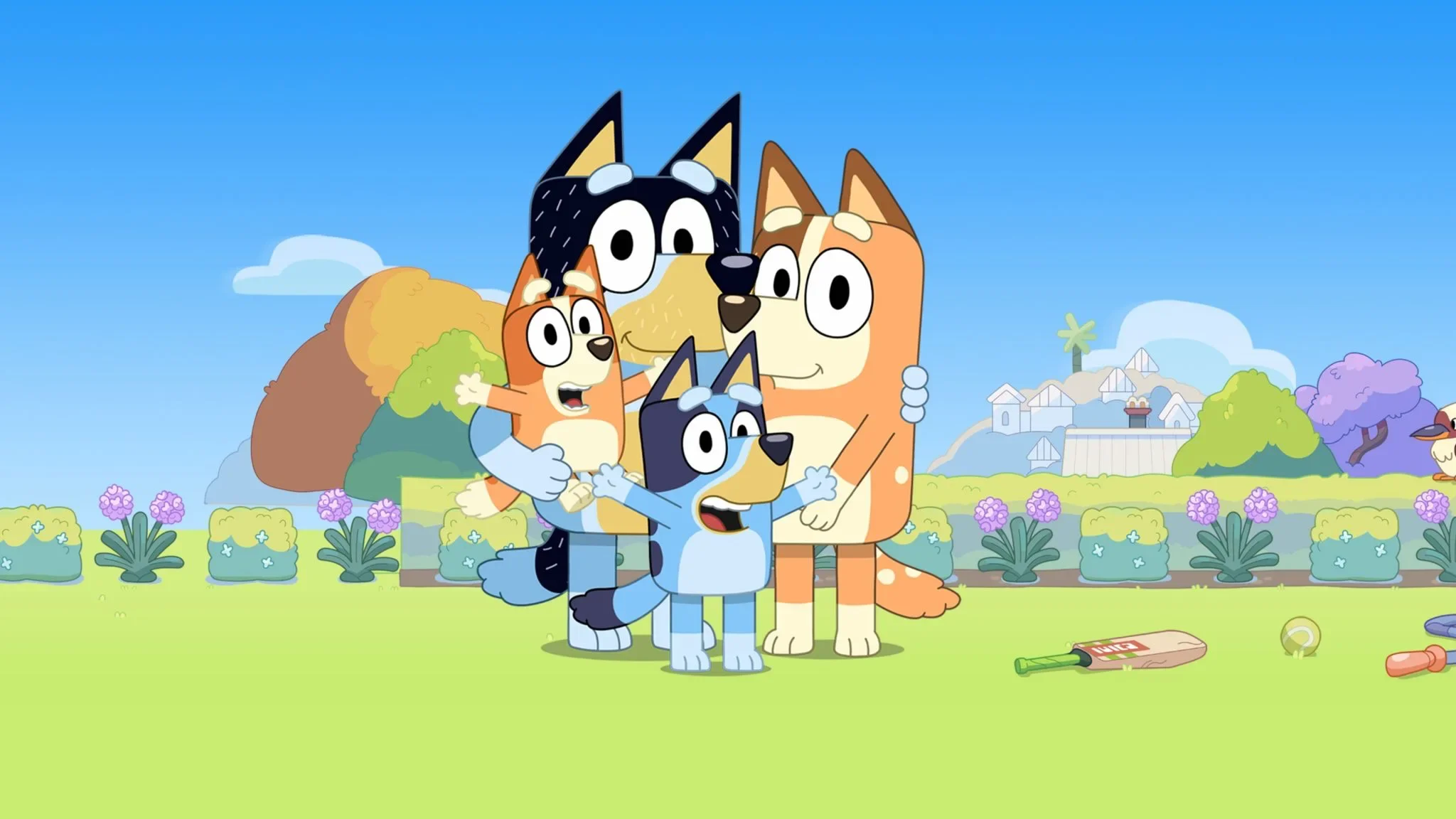
The Australian cartoon about a Blue Heeler family in Brisbane follows six-year-old Bluey, her little sister Bingo, and their parents, Bandit and Chilli. Through imaginative games, big feelings and very relatable family moments, the show hasbecome a global hit. And it’s introducing kids around the world to something else, too: Australian English.
No lessons. No flashcards. Just a few episodes and suddenly the whole family’s talking like they’ve moved to Queensland.
Meet the Heelers
If you haven’t watched Bluey yet, here’s a quick introduction to the family behind all the fun.
Bluey: The six-year-old blue heeler pup at the centre of the show. She’s imaginative, curious and always coming up with games for everyone to play.
Bingo: Bluey’s younger sister, a red heeler with a big imagination of her own. She’s a little quieter than Bluey, but just as playful.
Bandit: Dad. An archaeologist by day and a full-time silly sausage by the time he gets home. He loves playing games with the girls, even when they turn him into a taxi, a robot or something else entirely.
Chilli: Mum. She’s patient, funny and usually the voice of reason when things get a bit out of hand. Though she’s certainly not above joining in the fun herself.
The Heelers are surrounded by a colourful bunch of family, neighbours and friends, including Bluey’s cousins Muffin and Socks, her teacher Calypso and her schoolmates Rusty, Indy and Mackenzie.
The characters are a big part of what makes the show so relatable. They play, argue, make up, get things wrong and learn as they go. And along the way, viewers get a little taste of everyday Australian family life, too.
How did a cartoon dog take over the world?
Bluey started out on ABC Kids in Australia before making its way onto other streaming platforms and to be seen in homes around the world. Since then, parents overseas have noticed their kids picking up Aussie words and expressions. Some are asking where the “rubbish bin” is. Others are calling their siblings “cheeky”, asking for a “dunny” or referring to a gas station as a “petrol station”.
And honestly, we at G’Day Galah love that!
The show doesn’t stop to explain every Australian word. It lets the language do its thing. Kids hear the words in context, while they’re busy watching Bluey and her little sister Bingo get up to mischief.
That’s a pretty good way to learn a language, if you ask us. The more you hear Australian words being used naturally, the easier they become to understand. We explore this in more detail in our guide to learning common Australian slang.
And it works both ways, plenty of Aussie kids grew up watching American TV and picking up words like “sidewalk” and “trash” instead of “footpath” and “rubbish”.…Fair’s fair, mate.
What Bluey can teach you about talking Aussie
Here’s what we reckon: if kids can pick up Aussie slang from a cartoon dog, you can too! You don’t need to move to Brisbane (though it’s a lovely place to visit). You just need to hear the words being used, see what they mean in context and have a bit of fun along the way.
That’s one of the reasons we love Bluey. It shows how language is part of everyday life. The words, the expressions, the way people talk to each other. You learn a little more with every episode. And that’s what G’Day Galah is all about.
The Bluey slang list
Here are a few Aussie words and expressions you might hear in Bluey, along with what they mean.
Brekkie: Breakfast. Aussies love shortening words, and this one’s a classic.
Bin chicken: A nickname for the ibis, a long-beaked bird with a knack for raiding rubbish bins. Not the most flattering name, but it’s earned its place.
Chook: A chicken. You might hear someone called a “silly chook” when they’re being a bit ridiculous.
Dunny: The toilet. A very Aussie word, though perhaps not one you’d use in a fancy restaurant.
Dobber: Someone who tells on another person. The verb is “dobbing”, as in “Don’t dob on me!”.
Bags not: A way of claiming you’re not doing something. “Bags not changing the nappy!” means someone else is definitely doing it.
Fluffy: In Bluey, a fluffy is a fart. Yes, really. And “stinky fluffies” are exactly what you think they are.
Postie: The person who delivers your mail.
Letterbox: The box where your mail gets delivered. In the US, you might call it a mailbox.
Tomato Sauce: What Americans call ketchup. Same stuff, different name.
Bubbler: A drinking fountain. It’s a particularly familiar word in some parts of Australia.
Bodgy: Something that’s dodgy, poorly made or not quite right.
Tradie: A tradesperson, like a sparky (electrician) or chippy (carpenter).
Ute: A utility vehicle. Think of it as Australia’s take on a pickup truck.
“Oh, biscuits!” A very polite way of expressing frustration when you’d rather say something a little stronger.
Want to explore more Aussie words? Check out our guide to speaking Australian, with tips on pronunciation, word shortening and some of the quirks of the Aussie accent.
Ready to talk like a local?
Start with our free Aussie Top 20 guide. It covers 20 everyday Aussie words and phrases, explained in plain English with illustrations and activities to help you with recall. Read our blogs, they cover various things Aussie. Take our Aussie Quiz and see how much you really know about Australia.
Want to keep learning? Join the waitlist for our comprehensive guide and be part of our founding flock. We’ll let you know when all the Aussie goodies are ready.
Now, if you’ll excuse us, we’re off to make some brekkie. Catch you later, galahs!