Fun facts about Australian English
If you've ever spent time around Australians and walked away slightly confused, you're in good company. Australian English is one of the most distinctive varieties of English in the world, having been shaped by Indigenous languages, British settlers, a vast and varied landscape, and a cultural personality that is entirely its own. It's colourful, creative, often contradictory, and absolutely worth understanding.
Here are some of the most fascinating facts about the language Australians actually speak.
Australian English has a vocabulary all of its own
Walk into any Australian supermarket and you'll find lollies where you expected candy, a doona on the linen shelf instead of a duvet, and a barbie in the outdoor section that has nothing to do with a plastic doll. Australian English is full of words that look familiar but mean something completely different and new words you've never encountered before.
Many Australian words come from Indigenous languages
This is one of the most important and often overlooked facts about Australian English. A number of the words Australians use every day come directly from Aboriginal and Torres Strait Islander languages.
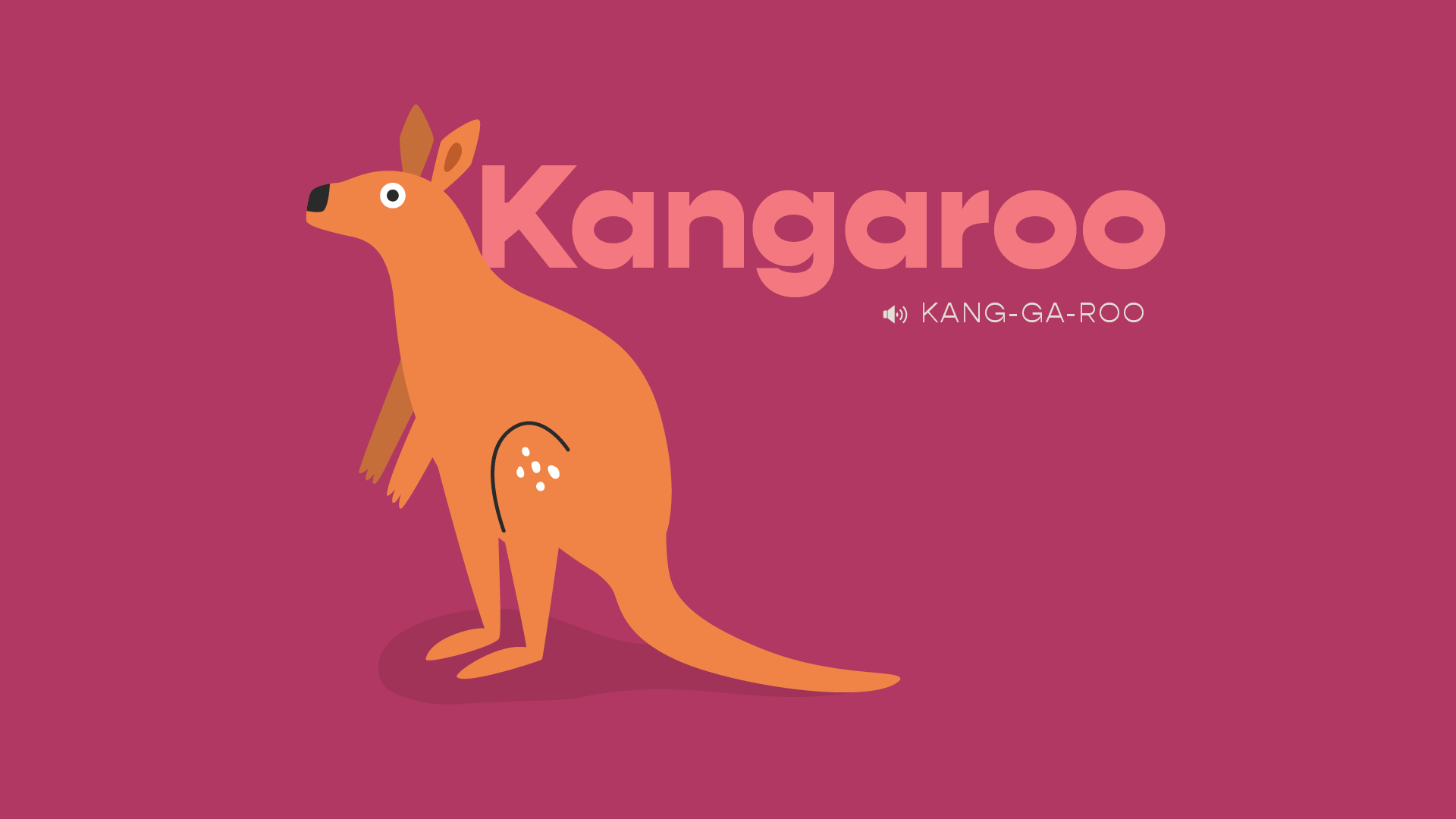
Kangaroo comes from the Guugu Yimithirr language of Far North Queensland. Koala is believed to come from a word meaning "no water" in several Sydney Basin languages, referring to the animal's ability to survive largely without drinking. Boomerang comes from the Dharug language of the Sydney region. Billabong — a waterhole or isolated pond — comes from the Wiradjuri language. Wombat, dingo, quoll, and galah are all words with Indigenous origins.
Place names tell an equally rich story. Canberra means "meeting place" in the Ngunnawal language. Parramatta means "the place where the eels lie down" in the Darug language. Toowoomba, Geelong, Wollongong, Coolangatta — across every state and territory, Indigenous place names are woven into the everyday geography of Australian life.
Australia has over 250 distinct Aboriginal and Torres Strait Islander language groups, making it one of the most linguistically diverse regions on earth before European settlement. While colonisation had a devastating impact on many of these languages, and the communities that spoke them, their influence on Australian English is profound, ongoing, and deserving of recognition. When Australians say kangaroo, billabong, or boomerang, they are speaking words that carry thousands of years of history.
There are three Australian accents
Most people outside Australia think all Australians sound the same, but they don't. Linguists identify three distinct varieties of the Australian accent, and once you know what to listen for, the differences are clear.
Broad Australian is the most exaggerated and the most internationally recognisable. It's the accent most associated with Australian stereotypes — think Steve Irwin, Paul Hogan, or characters in older Australian films. Vowels are stretched, words are swallowed, and the accent is thick enough to confuse even native English speakers from other countries. While it's less common among younger urban Australians today, it's still very much alive in regional areas.
General Australian is the most common accent and what you'll hear from the majority of Australians in cities and towns across the country. It's clear, distinctly Australian, but less exaggerated than Broad. Most Australian TV presenters, politicians, and public figures speak General Australian.
Cultivated Australian sits closest to a British Received Pronunciation accent and was once associated with the upper classes and formal education. It's significantly less common today than it was in the mid-twentieth century, Australian culture's deep aversion to pretension has gradually pushed it to the margins, but it does still exist, particularly among older Australians.
Australians are masters of saying the opposite of what they mean
This is perhaps the single most important thing to understand about Australian communication, and it trips up even fluent English speakers. Australians routinely use words and phrases that mean the exact opposite of what they appear to say, and the key to decoding them is context, tone, and a little cultural knowledge.
"Yeah nah" means no. "Nah yeah" means yes. "How ya going?" isn't really a question — it's a greeting, and the correct answer is "good thanks, you?" not an actual account of how you're going. "No worries" can mean you're welcome, it's fine, don't mention it, or no problem at all depending on context. Learning to read between the lines is just as important as learning the words themselves.
The word "mate" does an extraordinary amount of work
No single word captures Australian culture quite like "mate." It's one of the most used words in the language, and its meaning shifts entirely depending on tone, context, and relationship.
Mate can mean a close friend you've known for decades. It can also mean a complete stranger you've just met at the servo. It can mean a colleague you've worked alongside for years. It can even mean someone you're mildly irritated with, in which case, the word "mate" carries a very particular weight that any Australian will recognise immediately.
The word is also famously democratic. In Australia, you might call your best friend mate, the checkout operator at the supermarket mate, your boss mate, and a stranger who just let you merge in traffic mate. It's a small word that carries the weight of an entire cultural attitude toward informality.
Rhyming slang is alive and well in Australia.
Cockney rhyming slang arrived in Australia with British settlers in the nineteenth century, but Australians didn't just adopt it, they made it entirely their own, developing a local vocabulary of rhyming expressions that is distinct from its British origins. The way rhyming slang works is simple in theory: a word is replaced by a phrase that rhymes with it, and then, in the Australian version especially, the rhyming word is often dropped entirely, leaving only the non-rhyming part. Which means you need to know the original phrase to understand what's being said at all.
For example "Dog and bone" means phone, "plates of meat" means feet, and "seppo" — short for septic tank — is Australian rhyming slang for American. It's layered, quirky, and surprisingly common once you know to listen for it.
Want to go deeper?
Understanding Australian English means understanding something real about Australia, the way Australians think, the things they value, the way they relate to each other, and the history that brought this particular way of speaking into being.
The G'Day Galah guides are the easiest and fun way to get across Australian English, from the words locals actually use to the cultural context that makes them make sense.
Start with our free Aussie Top 20 guide — no credit card, no pressure, just 20 essential Aussie words to get you started. Start learning — it's free.
Already done the Top 20? The 100% Aussie Galah takes you to a whole next level, this comprehensive guide covers all things Aussie.